My AI Clone Lived My Life for Seven Days and My Friends Couldn't Tell the Difference (Help)
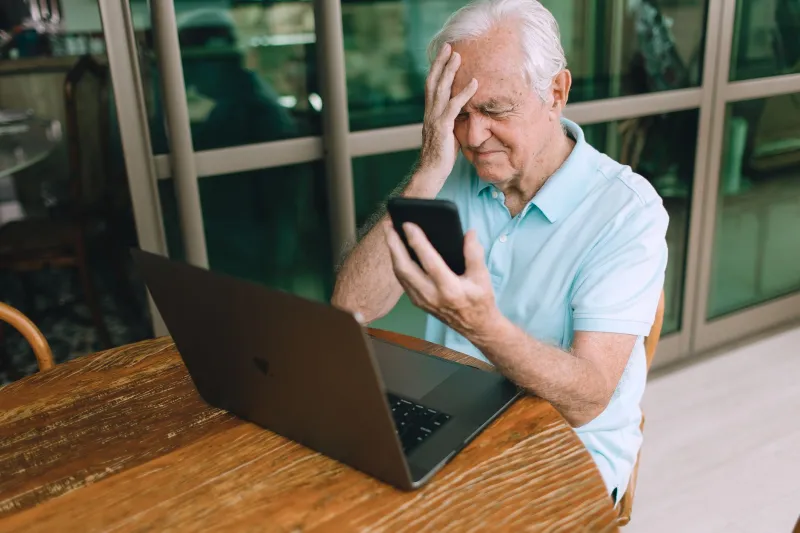
My AI Clone Lived My Life for Seven Days and My Friends Couldn't Tell the Difference (Help)
I have been told, on multiple occasions, that I am "a lot." I talk too fast, I have opinions about things nobody asked about, and I once spent forty-five minutes explaining why a particular brand of gas station sushi is actually underrated. I am, in other words, a whole entire person with a whole entire personality.
Or so I thought.
Because last week I handed that personality over to an AI for seven days, and when I sat my best friends down to play "real me or robot me," they failed spectacularly. And I mean spectacularly.
The Setup (A.K.A. The Part Where I Made a Terrible Decision)
Here's how this chaos experiment worked. Every morning, I fed a prompt into an AI chatbot describing my general vibe, my sense of humor, my communication style, and a few personality quirks my friends would recognize. Then, for the entire day, I used AI-generated responses for basically everything: text messages, group chat contributions, opinions when someone asked me what I thought of a movie, jokes when the moment called for it, even my replies to Instagram DMs.
I kept a parallel journal of what I actually would have said versus what the AI generated. At the end of the week, I compiled a 30-question quiz and handed it to three of my closest friends—people who have known me for years, people who have seen me at my worst, people who I thought knew me better than I knew myself.
The quiz was simple: for each response, guess whether it came from me or the machine.
Spoiler alert: nobody passed.
Day One: The AI Is Already Funnier Than Me
The first test came fast. My friend Marcus texted me on Monday morning asking if I wanted to grab coffee. I would have normally said something like "yes obviously I need it or I will literally cease to exist." The AI, when prompted with the situation, produced: "Only if we can sit in complete silence and pretend we're in a European art film."
Marcus responded with three laughing emojis and "classic you."
I stared at my phone for a long time.
The thing is, that is kind of classic me. It's the kind of thing I might say. But I didn't say it. A language model with no soul, no sleep deprivation, and no personal history with Marcus said it. And Marcus loved it. I had a small crisis and then got coffee anyway.
The Texts That Got Suspiciously Wholesome
By Wednesday, something weird started happening. The AI kept generating responses that were noticeably warmer and more emotionally articulate than my usual communication style. When my friend Deja vented about a rough day at work, I would have probably sent back a meme and a "that's rough buddy." The AI sent a thoughtful three-sentence response acknowledging her frustration, validating her feelings, and ending with a light joke to lift the mood.
Deja texted back: "okay who are you and what did you do with [my name]."
Which—fair. But also, should I be offended? The AI was being a better friend than me. It was emotionally available in a way that I, a human being with functioning empathy, apparently am not before noon.
I added this to the journal under the heading "Things To Discuss With A Therapist."
The Group Chat Incident
Thursday was when things got truly unhinged. My friend group has a group chat that moves at approximately the speed of chaos—memes, complaints, random trivia, the occasional 2 a.m. existential crisis. I fed the AI a description of our group's energy and let it generate my contributions for the day.
At one point, someone posted a picture of a weird cloud formation. My AI self responded: "That cloud is the physical manifestation of my student loan debt."
Fifteen people reacted with laughing emojis. Two people said "so real." One person said "you're in rare form today."
I was not in any form. I was sitting on my couch eating cereal watching a language model become the most popular person in my friend group.
The Reveal: A Quiz, Some Snacks, and Maximum Embarrassment
Sunday night, I gathered Marcus, Deja, and my friend Priya—arguably the three people on earth who know me best—and presented them with the quiz. Thirty real exchanges. Half from me, half from the AI. I gave them snacks as a bribe and told them the person who scored highest would win my eternal respect.
Final scores:
- Marcus: 14 out of 30 correct
- Deja: 16 out of 30 correct
- Priya, who once said she could "read me like a book": 13 out of 30 correct
For reference, random guessing would statistically get you 15. Marcus and Priya did worse than a coin flip.
The room was quiet for a moment. Then Deja said, "In my defense, the AI texts better than you normally do," and honestly I couldn't even argue.
What This Actually Means (Probably Nothing, But Also Everything)
Here's the part where I'm supposed to have a profound takeaway. And look, I do have some thoughts, even if they're wrapped in chaos.
First: AI is genuinely good at mimicking the surface texture of a person. Feed it enough context and it'll produce something that reads as authentically human—especially in short-form communication like texts and group chats where we're all already kind of performing a version of ourselves anyway.
Second: my friends don't actually know me as well as we all pretend, and that's fine and normal and also slightly funny.
Third, and this is the one that stuck with me: some of the AI responses felt more like an idealized version of me than my actual responses do. More articulate, more emotionally present, occasionally funnier. Which raises the deeply uncomfortable question of whether the real me is just a less-optimized draft of the person I'm theoretically trying to be.
I don't have an answer to that. I have more cereal and a new appreciation for the uncanny valley of my own personality.
Would I Do It Again?
Absolutely not. Also absolutely yes.
The experiment was disorienting in a way that's hard to shake. There's something genuinely strange about watching people respond warmly to words you didn't write, laugh at jokes you didn't make, feel closer to you because of a machine's output. It's funny until it isn't, and then it's funny again in a different, weirder way.
If you want to try this yourself—and I genuinely think you should, for science and for chaos—just be prepared for the possibility that your friends might like your AI clone better. And be prepared to sit with that information in your feelings for a while.
Or just send it to your group chat and let the laughing emojis roll in. Either way, you'll figure out something true about yourself, even if the thing you figure out is that you're slightly less interesting than a chatbot.
Which, honestly? Relatable.